
Classroom activities
Stock activities for schools: worksheets and teacher answers
Choose a topic and a focused task: calculate, evaluate a claim, follow ownership or interpret company and market data. Every resource includes fictional evidence, student tasks and support for the review afterwards.

Calculate, interpret and evaluate sources
Start with claims and weights. Continue with money, percentages, charts, company events, purchasing power, fees or a paper market game.
Evaluate stock claims: a classroom activity with three statements
A 30-minute classroom activity. Examine a fictional stock post, distinguish a reported figure from a forecast and write a conclusion with clear sources. Includes teacher notes.
Portfolio weights in the classroom: worksheet and answer key
A complete 35-minute calculation session. Compare two fictional portfolios under the same price changes, calculate new weights and discuss what the result shows.
Money and percentages: a classroom worksheet with answers
A 30-minute calculation session with three fictional accounts. Compare gains in money and percentages, test equal starting amounts and check a rise followed by a fall.
Read a stock chart in class: three claims and an answer key
A 35-minute activity with a fictional price chart and the same data in a table. Choose endpoints, test three claims and explain how the period changes the answer.
Stock splits and new shares: ownership cards for the classroom
A 40-minute session with two independent event cards. Calculate share counts, ownership and model payments. Includes a worksheet, comparison table and answer key.
Inflation and purchasing power: a classroom basket worksheet
A 30-minute session with fixed quantities and fictional prices. Compare basket costs, budgets and purchasing power. Includes a student table and teacher answers.
Stock order fees: a classroom worksheet and cash-flow answers
A 35-minute session. Two groups have the same shares and price movement but different numbers of orders. Calculate cash flows, account results and break-even prices.
A paper stock-market game: two rounds, student journal and answers
A complete 45-minute classroom game with three fictional companies, fixed prices and two rounds. Track trades, cash and holdings without an account. Includes teacher answers.
Ownership, funds and stock indices
Use roles, cards and timelines for voting rights, IPO proceeds, fund holdings, ETF prices, bonds and index weights.
Mock shareholder meeting: voting cards, majority and answers
A 45-minute role-play with four ownership groups. Count shares and votes separately, hold a fictional vote and test how absence changes the majority.
IPO classroom activity: trace proceeds and allocations
A 40-minute activity with an issuer, selling shareholder and applicants. Trace new and existing shares, check payment recipients and calculate a chosen allocation rule.
Fund units in class: map holdings and ownership levels
A 40-minute session with a fund, companies and a unit holder. Calculate value per unit, mark cash and test new units without mixing ownership levels.
ETF quote cards in class: check price and timestamp
A 35-minute source-checking activity with bid, ask and fund value. Identify stale NAV, calculate the spread and test a second card from the same timestamp.
Bond payment timeline: student worksheet and answers
A 40-minute session with a fictional coupon bond. Place payments on a timeline, calculate the two-year result and state what is missing when payment is uncertain.
Build a stock index in class: two weighting rules and answers
A 45-minute activity with three fictional companies. Build market-capitalisation and equal-weight indices, compare results and explain what each rule measures.
Company statements and payments
Audit headlines and build payment calendars or cash-flow bridges. Check net debt, ROE and inventory flows together.
Revenue growth classroom worksheet: check three headlines and find the error
A 40-minute workshop with three segments, an incorrect growth headline and an acquisition card. Student tasks and answers distinguish total growth from a simple percentage average.
Net debt classroom activity: loan and cash event cards with answers
A 40-minute activity moving fictional loan and cash cards. Follow borrowing, repayment and inventory purchases while keeping net debt separate from all liabilities.
Liquidity classroom worksheet: build a payment calendar and find the cash gap
A 45-minute activity with the same balance sheet but two collection dates. Calculate liquidity ratios, follow cash by day and identify a possible funding gap.
Cash-flow bridge classroom activity: sort payment cards and reconcile cash
A 45-minute workshop sorting seven payment cards. Build a cash-flow bridge, reconcile closing cash and distinguish a defined free-cash-flow measure from the change in cash.
ROE classroom worksheet: compare equity bases and shareholder returns
A 40-minute activity with two fictional companies and separate share-price cards. Calculate ROE using average equity and check what the ratio can actually establish.
Inventory classroom activity: item cards, turnover and worked answers
A 45-minute workshop following opening inventory, purchases and sales over 90 days. Calculate item counts, cost of sales and inventory ratios with explicit periods.
Instruments, trading and valuation
Match instrument cards, create a trading tape and audit valuation claims. Move buyback tokens and build a share-day timeline.
Match stock cards in the classroom: company, share class and venue
A teaching card game about tickers and ISIN. Sort fictional instrument cards, identify missing evidence and explain why a shared company name is insufficient.
A classroom trading tape: count shares, executions and traded value
Act out three fictional stock trades with buyers, sellers and a recorder. Count each executed share once and distinguish traded value from company revenue.
Build a classroom capital bridge: share price, market cap and EV
Draw a simplified enterprise-value bridge using market-valued equity, debt and cash. Audit event cards and explain why EV divided by shares is not the quoted share price.
Audit P/S claims in the classroom: sales, margins and periods
An editorial workshop where students calculate price-to-sales ratios and margins from fictional cards. Rewrite excessive valuation claims and spot a mismatched reporting period.
Share-buyback tokens: cash, ownership and earnings per share
Move share tokens and cash cards in a classroom model with a completed buyback and cancellation. Check what changes for an owner who retains their shares.
Share days on a timeline: a classroom weighted-share activity
Build a timeline with three share counts and unequal intervals. Calculate share days, period-weighted shares and EPS, then explain why a simple average is wrong.
Prepare the students’ work
The claims-evaluation session takes about 30 minutes and uses two fictional texts about the same company. It suits a lesson on distinguishing a reported figure from a judgement or a forecast. No information search is needed to begin.
The portfolio-weight session takes about 35 minutes. Students compare two fixed allocations, repeat the calculation with an alternative scenario and receive a complete answer key. Read the concept lesson on portfolio weights first if percentages as proportions need revision.
Choose one activity at a time. Foundation sessions use student tables and a paper market game. Role activities follow ownership, funds and payments. Statement sessions examine company evidence, while market-data activities use cards, tokens and timelines. Read the chosen task’s preparation notes and use its answer key for the review.
All activities work without an app account. Read the instructions on screen or copy the student questions onto your own paper. The suggested timings describe the session plans; they do not promise how quickly everyone will learn.
Continue with the concepts or the product experience
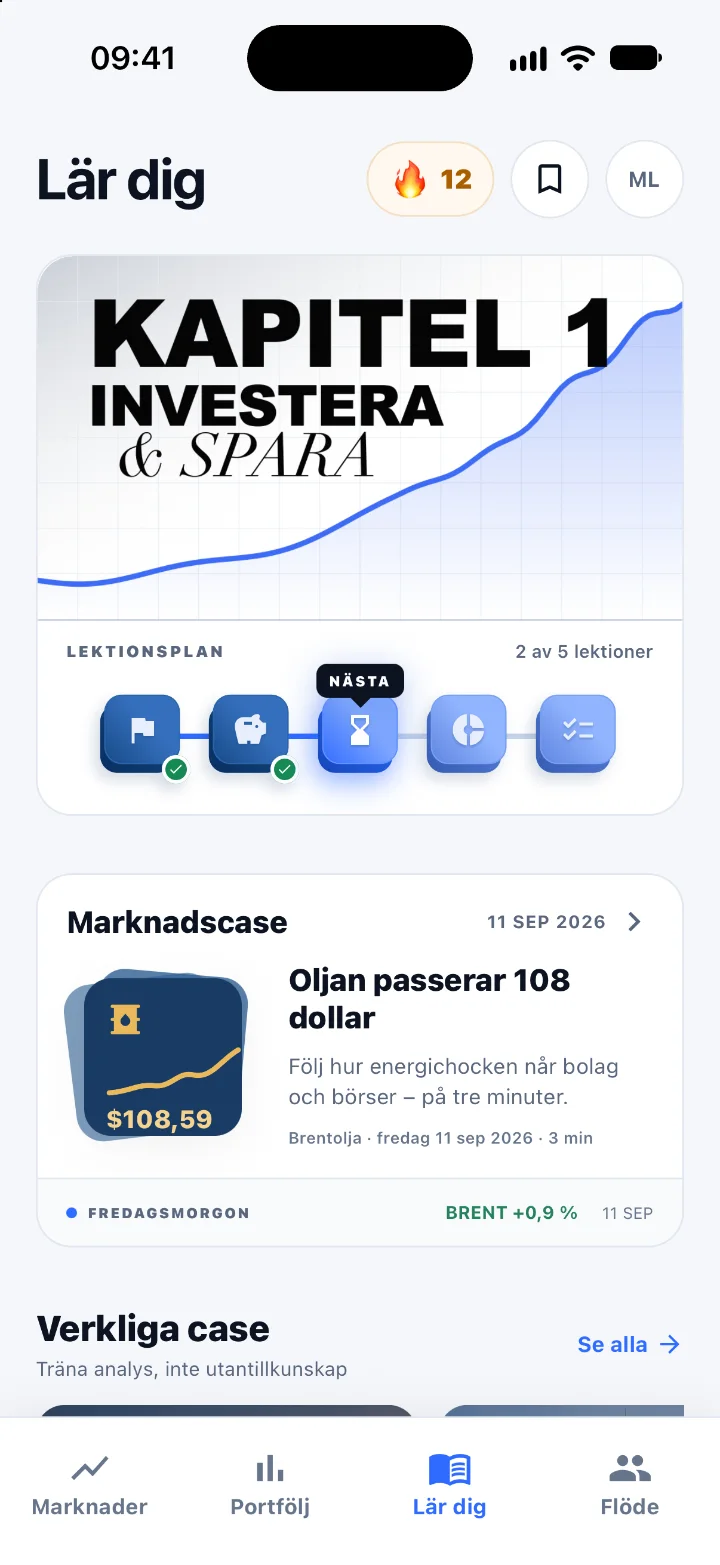
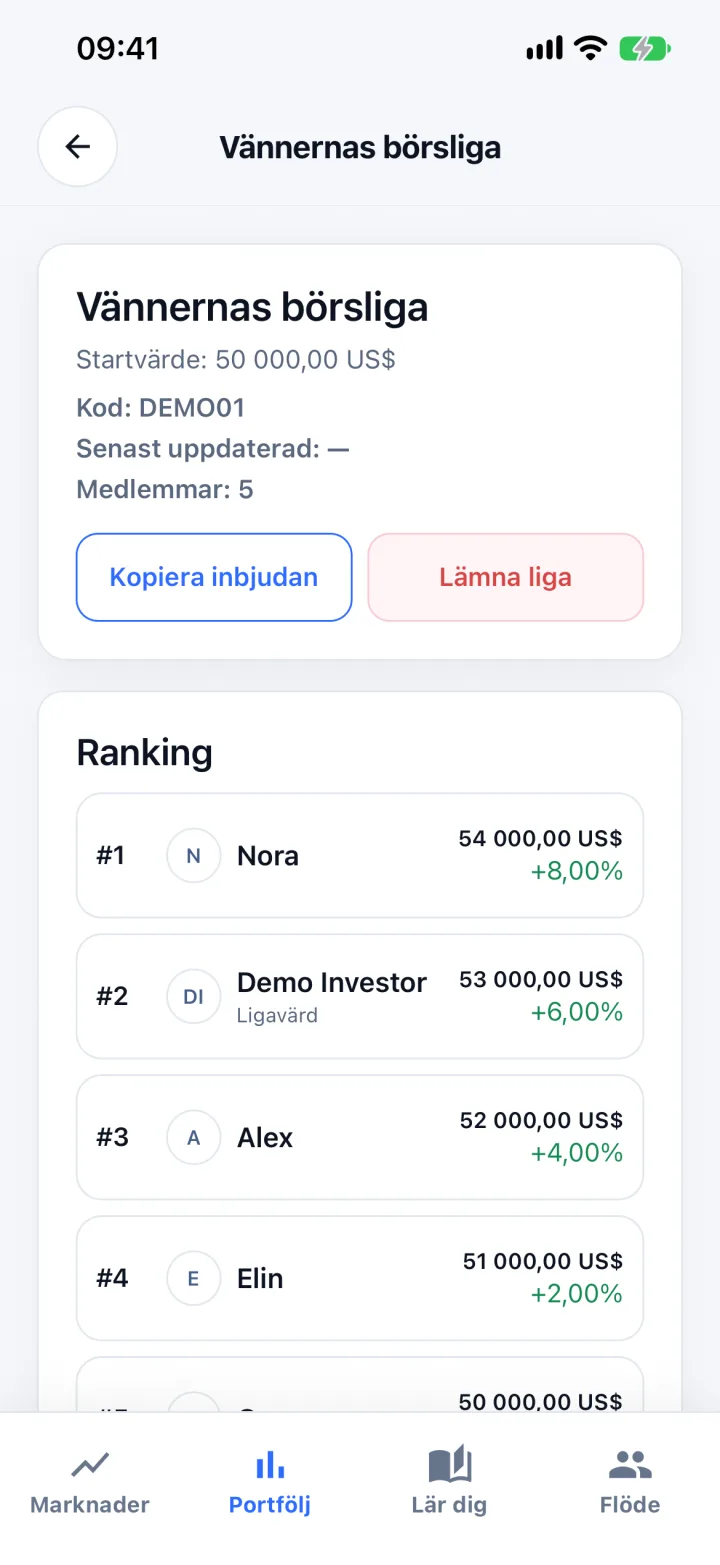
The lesson library provides explanations and original calculations. The product guide shows how Investiq describes short lessons, virtual portfolios and comparing together, and where to find current launch information.
Practice now. Invest later.
Investiq is live

Free · For iPhone · Now on the App Store