
Learn together
Learn about shares together: activities for family and friends
Start with a conversation or a simulated purchase. Continue with company evidence, documentation and practice-portfolio reconciliation. These activities work on paper with fictional amounts and without buying any shares.

Start and learn together
Choose a conversation, shared market game, first simulated purchase, study group or seven-session plan.
Talk to a teenager about shares: an activity to do together
A 20-minute conversation for an adult and a teenager. Use a fictional bakery to distinguish ownership, price and risk without buying shares.
Stock-market game with friends: rules for a fair learning activity
Plan a stock-market game with virtual money: the same starting value, clear time limits and two scenarios. Includes calculations and questions for the review afterwards.
First virtual stock purchase: check quantity, cost and cash
Make a first paper stock purchase with SEK 750 of fictional cash. Follow quantity and cash before and after, then check why fifteen shares can exceed a budget.
Stock investing study group: a first session with roles and review questions
A suggested 60-minute session for three or more beginners. Rotate explanation, arithmetic checking and source questions using a fictional company and worked answers.
Learn about shares: a seven-session plan with concrete worksheets
Seven suggested short sessions about shares, from ownership to your own review. Each session produces a worksheet linked to a relevant concept or product guide.
Document and examine companies
Keep a practice journal, compare two fictional companies or use a checklist to read a company report.
Investing practice journal: a template before a decision and after the outcome
A paper-friendly journal template: source, observation, hypothesis, fictional decision and later review. Includes a completed example and a reasoning check.
Compare two companies as a beginner: match the period, unit and question
Compare two fictional company reports. Correct thousands and reporting periods before calculating margins, then distinguish observations from a stock recommendation.
Read a company report: a checklist with a fictional review exercise
Check company, period, units and measures on a fictional report card. Correct four unsupported claims and calculate a margin without inventing missing cash figures.
Reconcile a practice portfolio
Track multiple trades, separate result components, record a paid dividend and check target weights, activity and missing prices.
Reconcile a practice portfolio: four trades, two shares and closing cash
Follow four fictional purchases and sales in order. Check remaining quantities and closing cash, then value the simulated portfolio without counting the same money twice.
Realised and unrealised gains: follow a partially sold practice position
Sell part of a fictional holding and value the remaining shares separately. Distinguish sale proceeds, realised result and the unsold holding’s value change using a worked worksheet.
Cash dividends in a practice portfolio: reconcile cash and share value
Record an explicitly paid fictional dividend once in cash and use a separately supplied later price. Check total value and identify when the same dividend has been counted twice.
Rebalance a practice portfolio: target weights, cash and whole shares
Calculate trades that restore a supplied fictional allocation. Follow target amounts, quantities and cash, then examine a target that cannot be reached exactly using whole shares.
Trading activity versus return: compare two fictional trade journals
Two journals share a starting balance and an unchanged share price but contain different numbers of trades. Calculate traded amounts, fees and closing value without treating activity as return.
Portfolio value with a missing price: separate a known subtotal from a guessed total
Check a fictional portfolio card when one holding lacks a price at the required time. Calculate the known subtotal, label mixed timestamps and separate assumed scenarios from verified value.
Agree on a shared plan
The family activity takes about 20 minutes. It starts with a fictional bakery and distinguishes a product purchase from part ownership. Let both people explain in their own words, and write down the question that remained after the conversation.
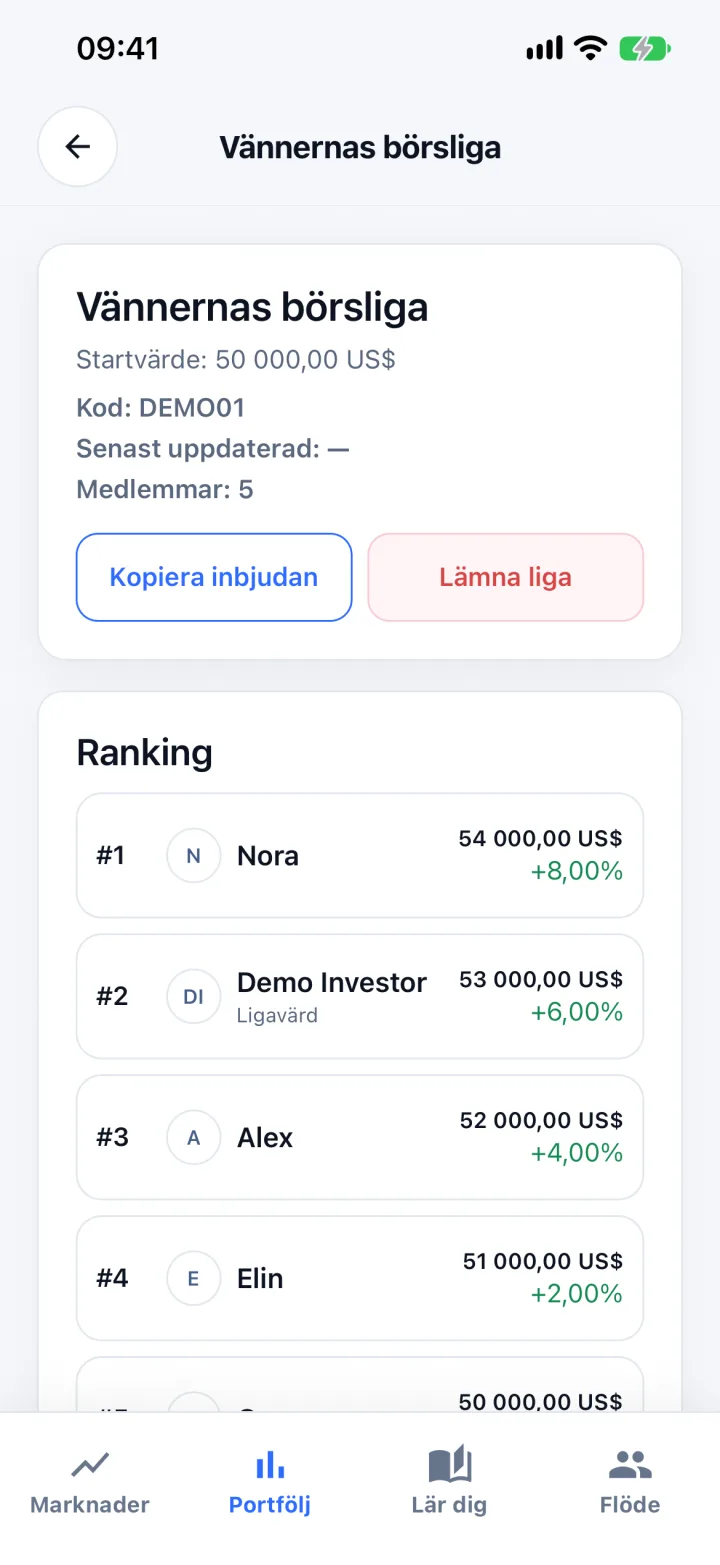
The activity with friends focuses on comparability: shared rules, the same starting amount and reasoning written before the outcome. Two invented scenarios help show why the highest ending value in one example does not prove an ability to predict the future.
For a longer plan, explore the study group or seven-session outline. Record questions in the journal before comparing companies. Reconciliation worksheets practise cash, holdings, result components and target weights; read each worksheet’s model rules before calculating.
All activities work without an app account. Read the instructions on screen or copy the student questions onto your own paper. The suggested timings describe the session plans; they do not promise how quickly everyone will learn.
Continue with the concepts or the product experience
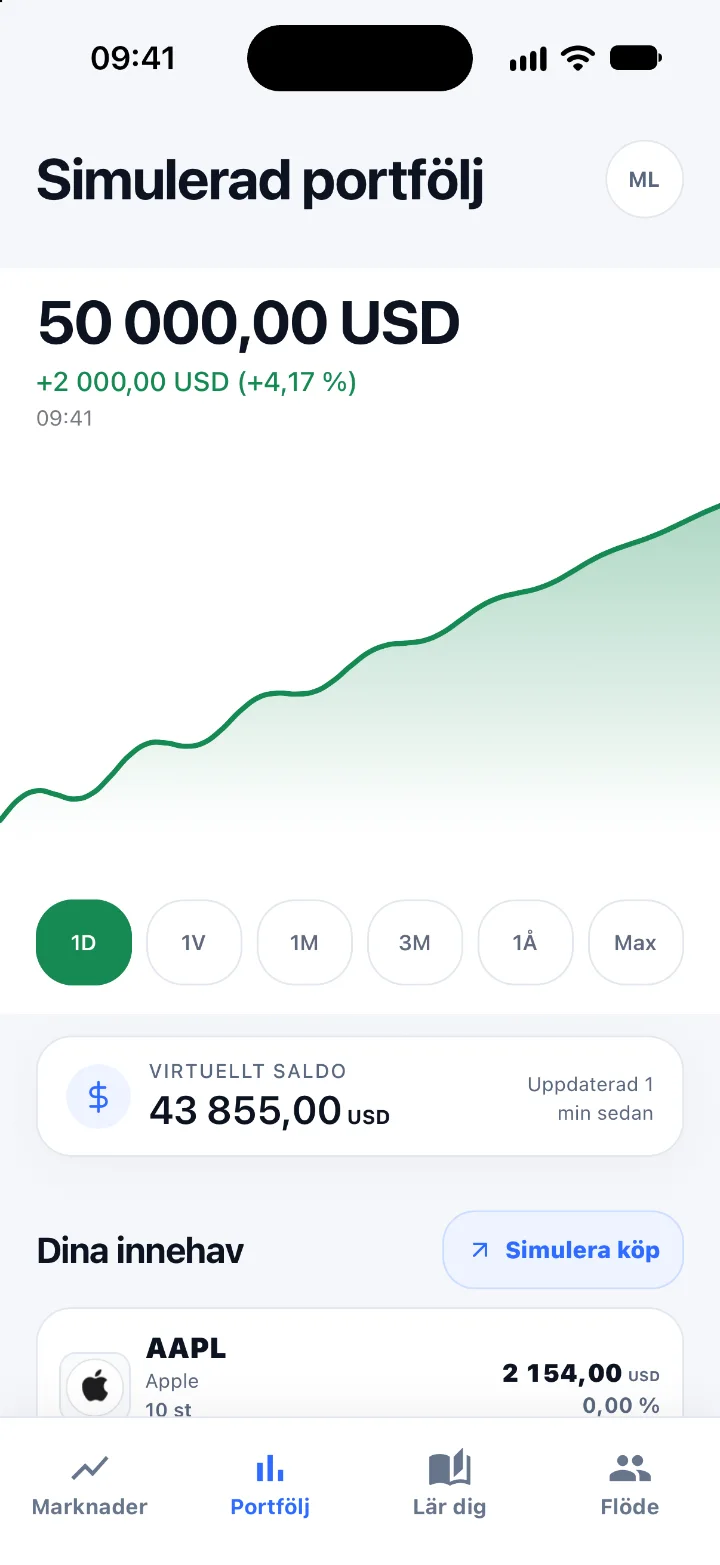
The lesson library provides explanations and original calculations. The product guide shows how Investiq describes short lessons, virtual portfolios and comparing together, and where to find current launch information.
Practice now. Invest later.
Investiq is live

Free · For iPhone · Now on the App Store