Product and educational material from
What do you want to examine?
Choose the next learning step based on what you can explain, rather than simply moving to the next screen.
Choose a question that can be answered
Write a question before reading: What do I own through a share? What portion of a portfolio does one holding represent? Why is a high ending value insufficient for comparing two exercises? Choose one question at a time. You can then see whether it was answered and what needs further investigation.
The app’s described learning flow contains short lessons and questions. The website’s open lesson collection is separate educational material that works without an app account. Links here lead to those open lessons; they do not promise that every web lesson appears with the same title or sequence in a particular app version.
Explain in your own words before calculating
Read the explanation, then put it aside. Write two sentences: what the concept means, and what it cannot establish on its own. For portfolio value, you might say that it combines holdings and cash, but a higher value can also result from a deposit. Check the explanation again afterwards.
If you get stuck, identify the precise distinction that is difficult. Is it share count versus value, proportion versus change, or fact versus assumption? Choose the next lesson around that distinction. Repeating a question is part of this working method, not a requirement for a specific repetition feature or automatic recommendation system in the app.
An original practice session of about ten minutes
Use this fictional question: A value rises from 100 to 110, then falls 10%. Are you back at 100? Write your first guess. Read the explanation of percentage change and calculate the second step using 110 as the base. The ending value is 99. The percentage figures are equal in size but apply to different values.
Explain the mistake without just quoting the answer: the second change is eleven, rather than ten. Try a new starting value of 200. The same sequence produces 220 and then 198. Both examples return −1%, despite having different amounts. The suggested timing does not specify how quickly a particular person learns.
If the table does not fit, scroll it sideways.
| Part | What to do |
|---|---|
| First two minutes | Write the question and your first guess. |
| Next three minutes | Read the explanation and mark the base for each change. |
| Next three minutes | Calculate and try a different starting value. |
| Last two minutes | Explain the distinction and write an unanswered question. |
Connect the learning to new information
If your question concerns a business, continue with company search and check identity before interpreting a number. If it concerns a simulated trade, track cash and holdings before and after. When learning together, choose a shared activity where both people explain their reasoning before seeing the result.
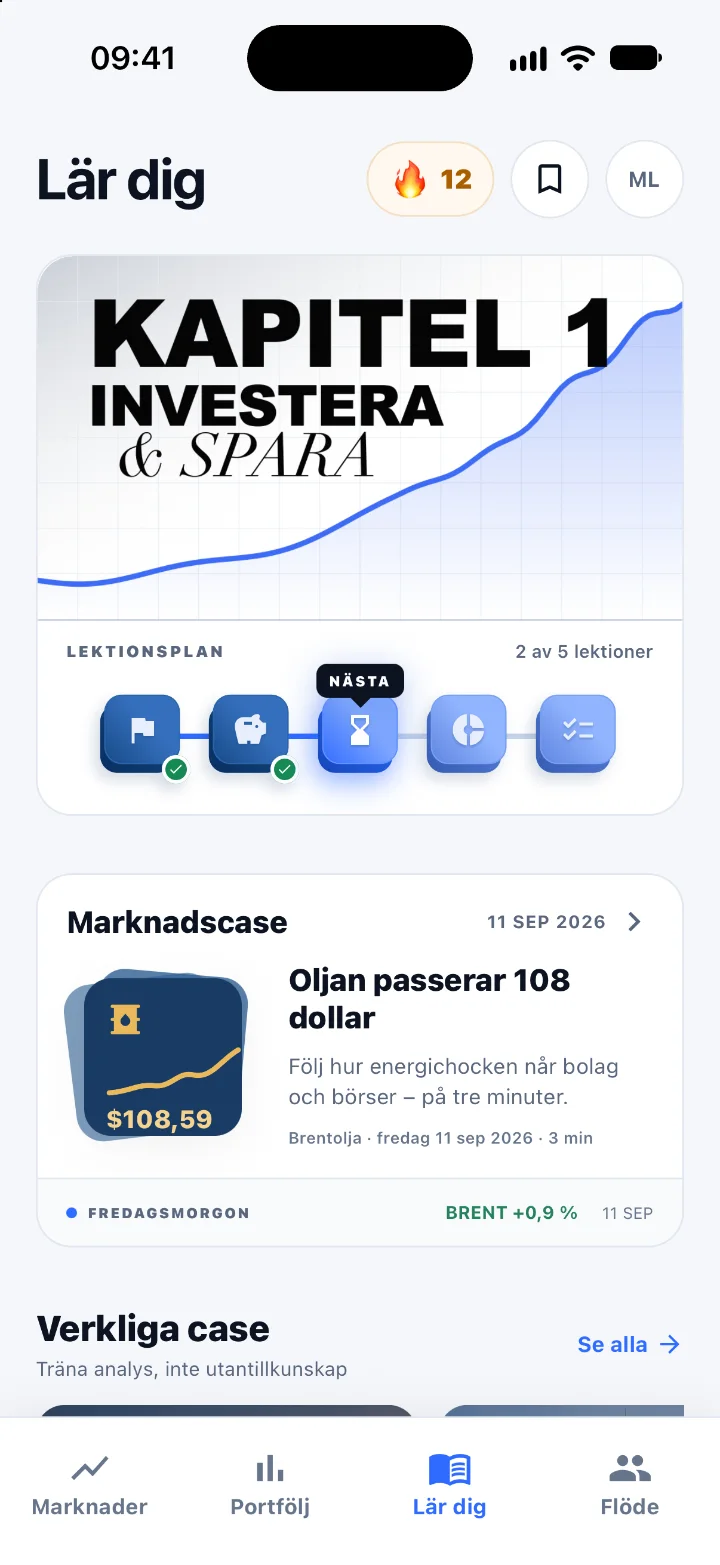
The development screenshot offers a view of the learning screen. The product guide distinguishes real screenshots from illustrated previews and links to launch information. You can already use the open web exercises, write answers on paper and check the solution. Finishing a session is a learning step, not proof that you can predict share prices.
See the development version
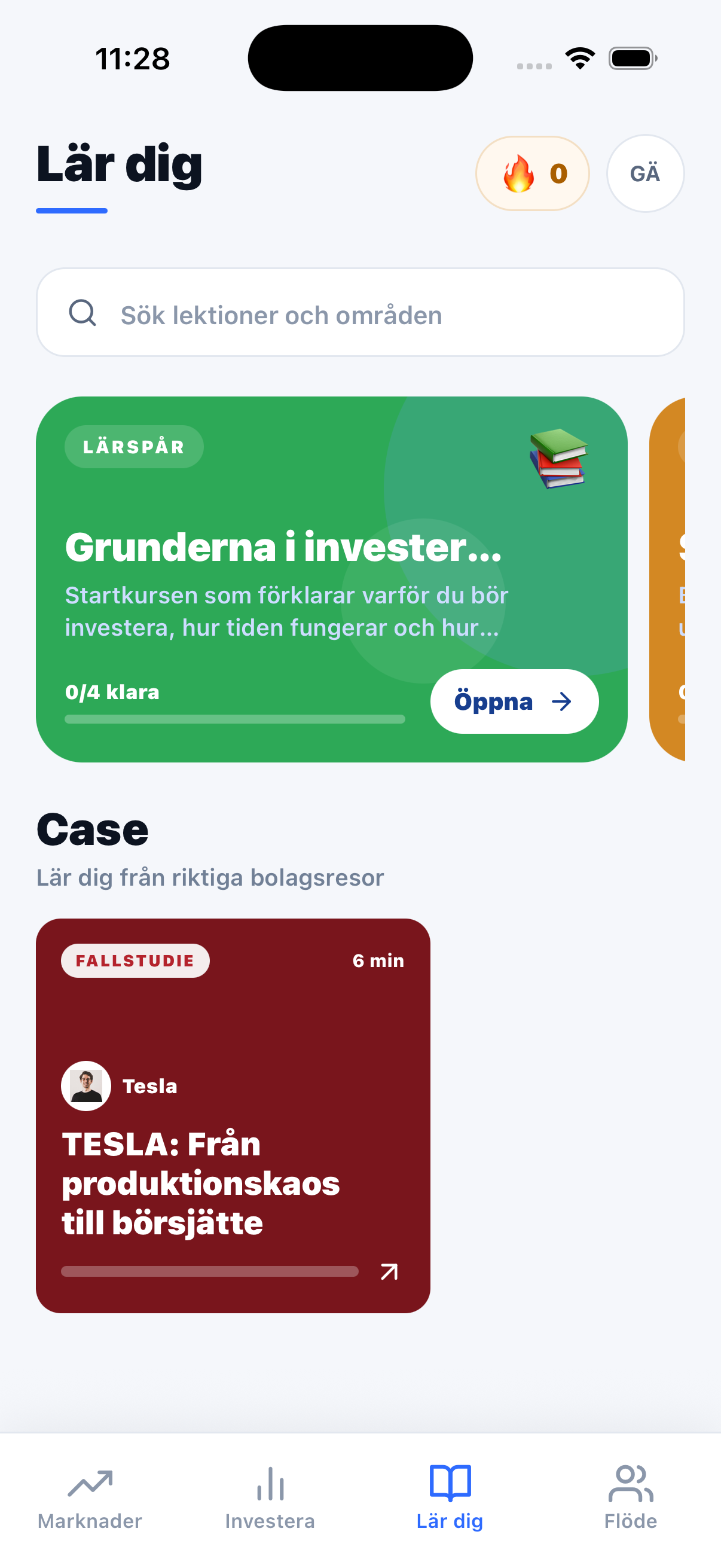
More about Investiq and the product guide with more screenshots and explanations.
Check with your own example
A friend says that +10% followed by −10% always cancels out. How would you explain the mistake using a starting value of 200?
Show the explanation
The value first becomes 220. Ten percent of 220 is 22, so it ends at 198. The decline applies to a new, higher value.
The increase was 20 and the decrease 22. The difference is −2 relative to a starting value of 200, giving −1%. The explanation needs to identify the base rather than only the final number.
Questions about the flow
Do I need an app account for the lessons linked here?
No. You can read the website’s open lesson collection without an app account. App availability is described separately in the launch information.
Are the website’s lessons the same courses as those in the app?
This page does not promise that correspondence. The web material provides open explanations and exercises; the screenshot shows a learning screen in a development version.
How should I choose what to read next?
Start with the question you cannot yet explain. The links below connect different questions to specific lessons and product flows.
Choose the next step for your question
Basis and exercise
The product description is based on Investiq’s product guide and development screenshots. The exercise material and calculations were created for this page. They contain no current market prices or recommendations about securities to buy.