Product and educational material from
What do you want to examine?
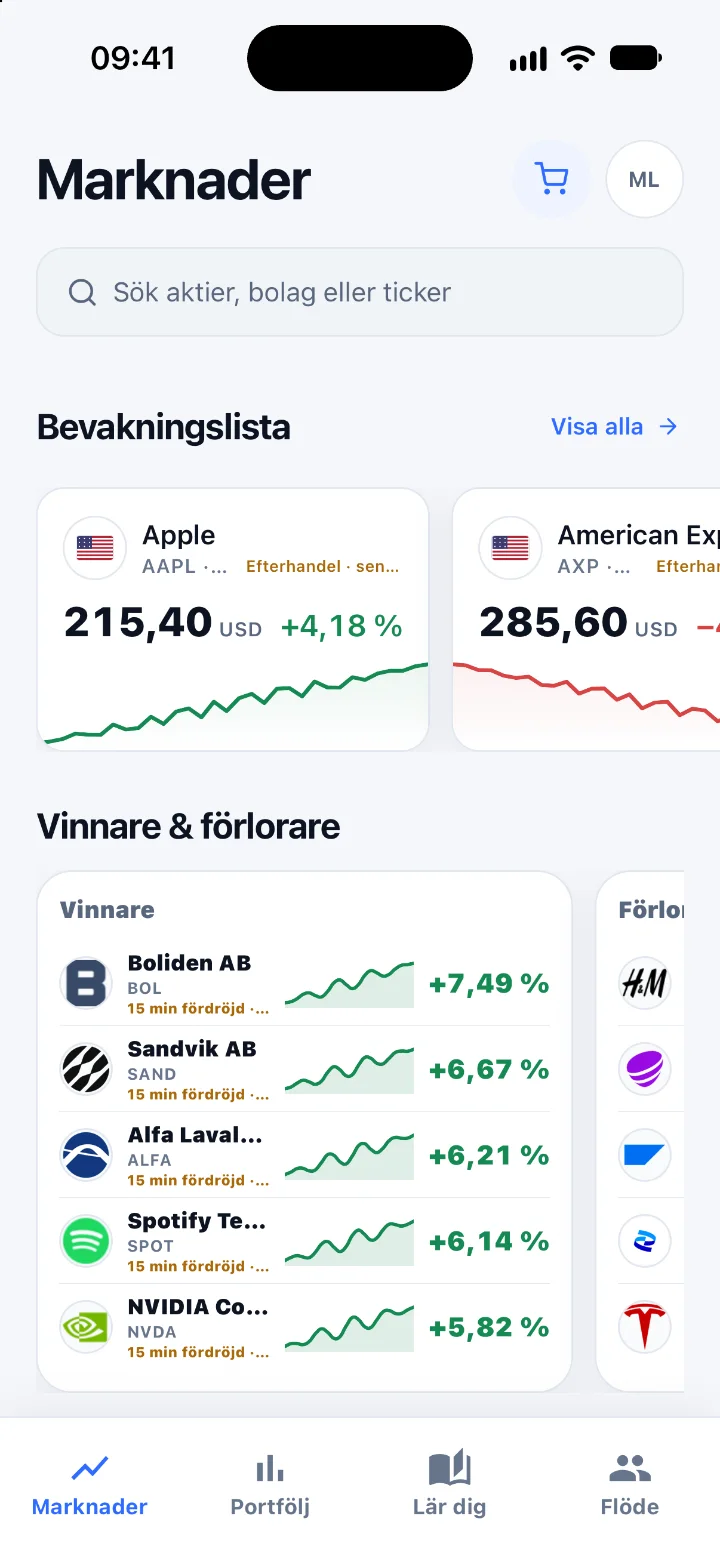
Move from a company search to documented information, with clear questions about what is still missing.
Check which company the search result describes
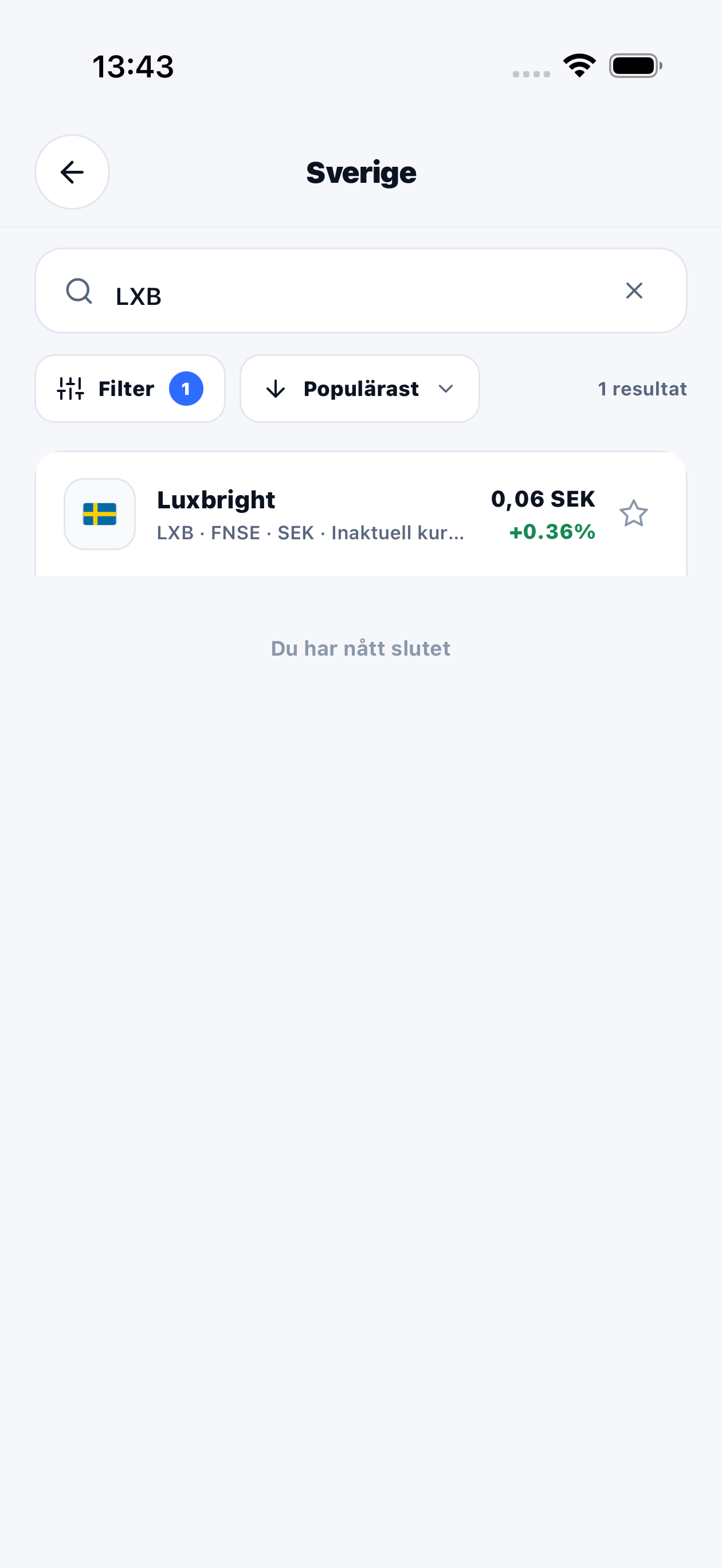
Start with the company’s full name. If the information includes a trading symbol, also called a ticker, write it beside the name. Check which market the information refers to as well. Similar names do not establish that two results describe the same business or the same security.
The development screenshot shows a search for Luxbright as an example of Investiq’s described interface. It is not a recommendation about that company or a guarantee of the companies available in a public version. Use company information to form questions rather than as a ready-made instruction about what to buy.
Read currency and time period before comparing
A price needs a unit. Fifty Swedish kronor and fifty US dollars are different amounts. Write the currency beside the number and check when the information was updated. If your material lacks a time or currency, mark that as something to investigate. Do not assume that a recorded image shows a current price.
Also read the period covered by the chart and the starting value used for a percentage change. A change over one day and a change over one year answer different questions. Historical prices show what happened in the presented material. They do not establish the next price or whether a future trade can happen on the same terms.
Try two fictional review cards
Imagine receiving the cards below for an activity. The names, symbols, markets and amounts are invented; they are not real companies to search for in the app. They help you notice that a recognizable part of a name is not a complete identification.
You can say that the cards use different currencies and describe different businesses in the model. You cannot say that the share marked 50 is more expensive than the share marked 40 in a common currency, because no exchange rate is given. Even after converting the prices, the per-share price alone would not describe each company’s total market value.
If the table does not fit, scroll it sideways.
| Information | Card A | Card B |
|---|---|---|
| Company name | Nordljus AB | Nordlight Inc. |
| Symbol in the exercise | NLJS | NLGT |
| Market in the exercise | Sweden | USA |
| Stated price | 50 SEK | 40 USD |
| Time | Missing | Missing |
Keep a note separating facts from assumptions
Make your own paper note with three headings: information I can read, source and time, question still unanswered. For example: Card A states 50 SEK; the time is missing; I need to find out what the company sells. The note is a method for your work, not a promised note-taking feature in the app.
Then open the revenue and profit lesson to understand the business, or the chart lesson if your question concerns the time period. The product guide shows how company search and simulated practice connect. Current launch information describes availability; this review method already works with information you bring to an activity.
- Check identity first.
- Write currency, period and time beside each figure.
- Mark missing information before comparing.
- Form a follow-up question about the business, rather than only its share price.
See the development version
More about Investiq and the product guide with more screenshots and explanations.
Check with your own example
You only have cards A and B. Can you determine which price is higher in Swedish kronor, and whether the figures refer to the same point in time?
Show the explanation
No to both questions. The exchange rate and times are missing.
Comparing 50 SEK with 40 USD requires a stated conversion. Neither card gives a time, so you also cannot know whether they describe the same moment.
Questions about the flow
Does the screenshot show current company prices?
No. The figures belong to the recording of the development version. Read the time in your actual material when examining a price.
Does the app have every company and search filter mentioned here?
The guide does not promise a complete company catalogue or specific search filters. It explains what to check in the information you have; the exercise cards are entirely fictional.
Does a low per-share price mean the company is cheaper?
A per-share price is not enough for that conclusion. Share count is needed to calculate market capitalization, and understanding the business requires more information.
Choose the next step for your question
Basis and exercise
The product description is based on Investiq’s product guide and development screenshots. The exercise material and calculations were created for this page. They contain no current market prices or recommendations about securities to buy.